13 Easy Christmas Sewing Crafts to Sell at Craft Fairs
Easy Christmas sewing crafts to sell at craft fairs are simple, low-cost handmade items, such as ornaments, stockings, and fabric gifts, that can be stitched in under an hour and priced for profit at holiday markets. This article gives you 13 easy Christmas sewing crafts spanning color, materials, lighting, furniture, accessories, layout, and small-space ideas, plus pricing and booth tips so every project earns its table space.
A good craft fair table feels like a small winter village: wool and flannel in cranberry and evergreen, the faint smell of cedar and cinnamon, and soft things people can’t resist touching. Shoppers buy with their hands first, so texture sells before price does. You don’t need advanced skills, only a sewing machine, a free weekend, and a plan for what to make in bulk. Here are 13 ideas worth saving, and stealing.
Why Easy Christmas Sewing Crafts to Sell at Craft Fairs Work So Well
Handmade holiday sewing has deep roots. Stockings, quilted tree skirts, and scrap-fabric ornaments grew out of thrifty household traditions in which nothing was wasted, and Victorian-era Christmas markets in Germany and England made handmade textile gifts a seasonal staple. Today’s craft fairs carry that tradition forward, with shoppers who actively prefer small-batch goods over mass-produced décor.
The palette sells best when it is specific: cranberry red, forest green, warm cream, buffalo check, natural linen, and touches of gold or copper. The materials are practical and affordable: cotton quilting fabric, wool felt, flannel, linen, fleece, canvas, Warm & Natural batting, and polyester fiberfill. A reader could buy most of this at a fabric store and a thrift shop in one trip.
The trend is current. Buy-handmade and shop-small movements, rising interest in sustainable gifting, and the popularity of side hustles have made craft fairs busier and more profitable for makers. Shoppers also want gifts under $25, which suits sewing perfectly, because small projects use scraps and take little time.
Small spaces work fine for this business. A card table, a folding sewing machine, and two plastic bins are enough to produce a full booth. The honest limit is time: a craft fair seller should expect to make roughly 100 to 150 items for a one-day event, so choose designs you can repeat quickly.
Style at a Glance
| Element | Detail |
|---|---|
| Philosophy | Small batch, scrap-friendly, fast to repeat, priced for profit |
| Key Materials | Cotton quilting fabric, wool felt, flannel, linen, batting, fiberfill |
| Key Colors | Cranberry, forest green, warm cream, buffalo check, gold |
13 Easy Christmas Sewing Crafts to Sell at Craft Fairs
1. Easy Christmas Sewing Crafts to Sell: Felt Ornament Sets
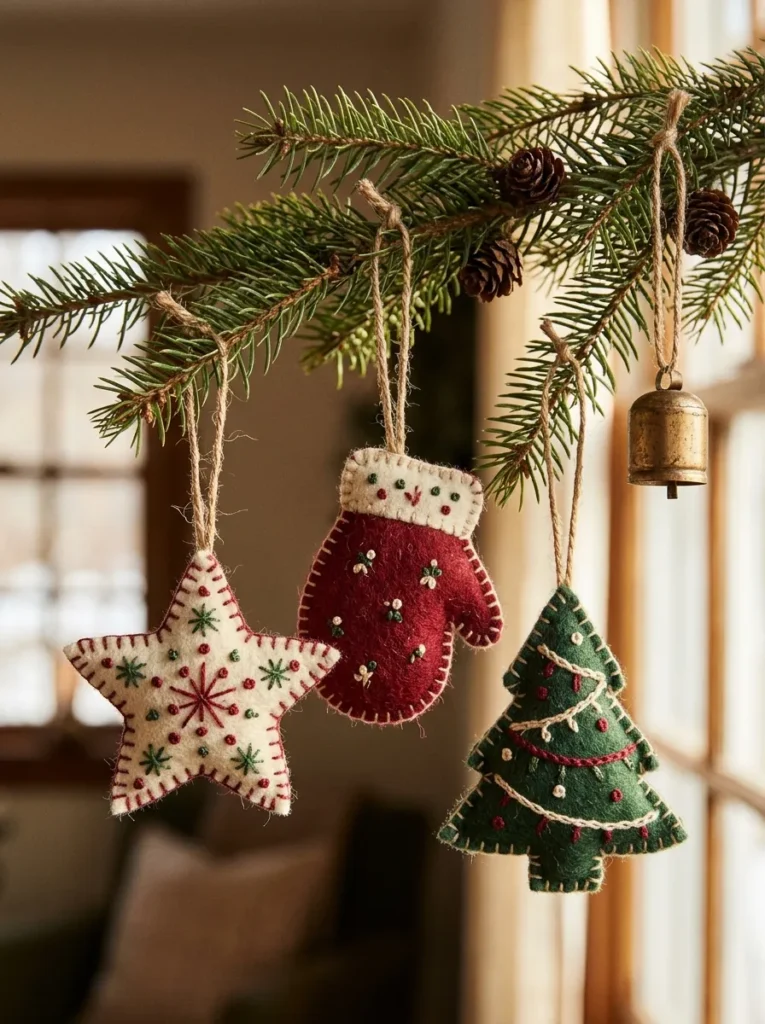
Vibe: The branch feels cozy, hung with small stitched shapes that look treasured on sight.
Why it works: Contrast stitching in cream against deep felt makes the handmade quality visible, and a limited palette lets a set read as one collection. Small, repeated shapes also produce a consistent product line that shoppers can mix and match.
How to get it: Cut shapes from a pattern template, pair two layers with a bit of fiberfill, and blanket-stitch the edges using three strands of embroidery floss. Sew a 5-inch jute loop into the top before closing.
💡 Quick Win: Sell sets of three for $12 and singles for $5. Bundles raise your average sale.
Shop The Look
- Wool blend felt sheets Christmas colors
- Embroidery floss cream cranberry green
- Felt ornament pattern template set
- Natural jute twine thin
- Polyester fiberfill small bag
Also view: 17 Christmas Crafts to Sell for Extra Holiday Money
2. Buffalo Check Mini Stockings
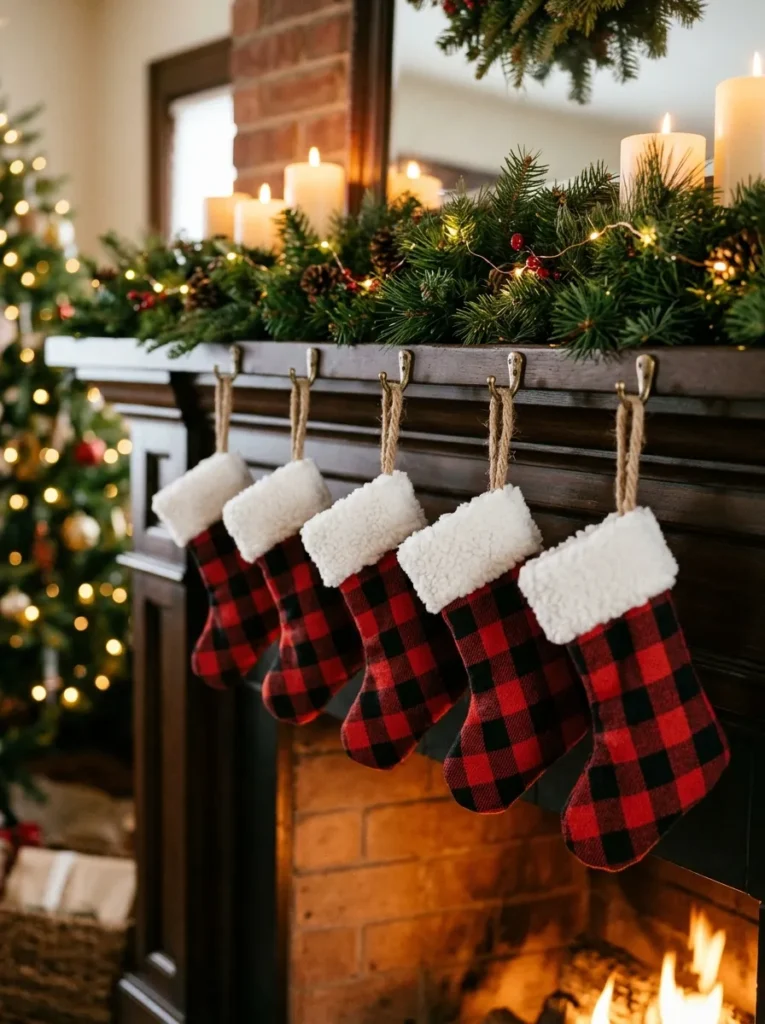
Vibe: The mantel feels festive, a lineup of small stockings ready to be filled.
Why it works: Buffalo check is a pattern that reads instantly as Christmas, and a fleece cuff adds a soft texture contrast against flat cotton. Mini sizing keeps fabric use low and price accessible.
How to get it: Cut two 6 by 9 inch stocking shapes from flannel and a 3 by 7 inch fleece cuff. Sew right sides together, turn, stitch the cuff on, and add a loop at the top.
Shop The Look
- Buffalo check flannel fabric red black
- White sherpa fleece fabric
- Mini stocking pattern paper
- Brass cup hooks small
- Rotary cutter and mat set
3. Scrap Fabric Tree Garlands
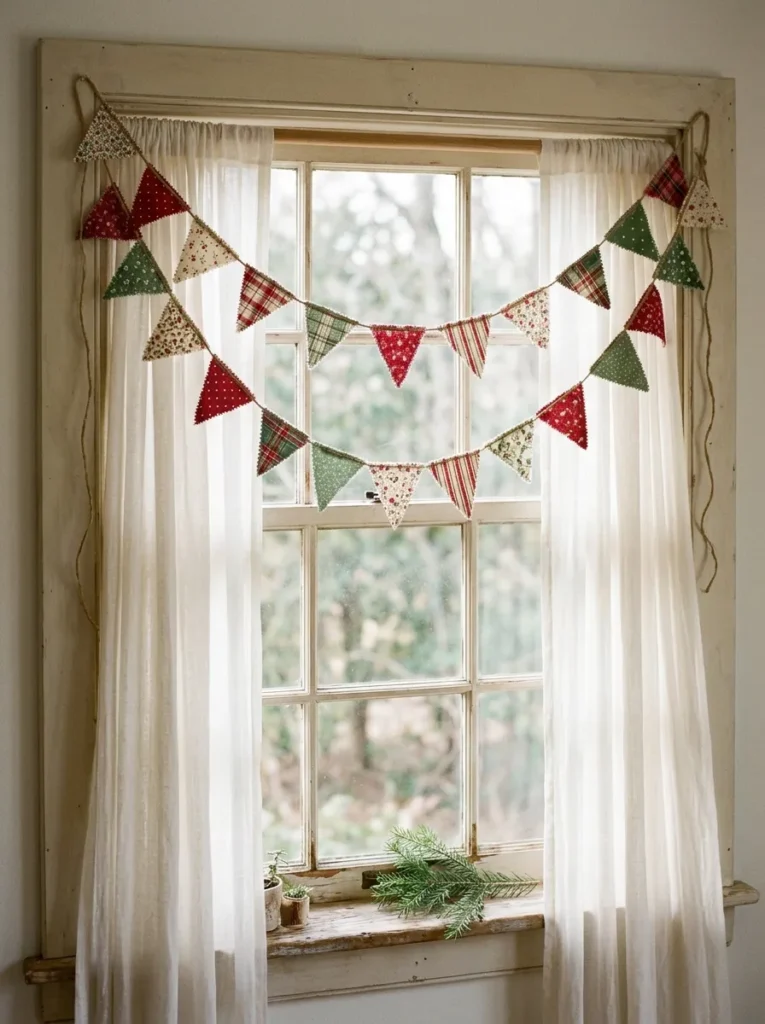
Vibe: The window feels playful, strung with little flags of leftover fabric.
Why it works: A garland turns scraps into a product with almost no waste, and pinked edges prevent fraying without hemming. Repetition across a long line gives it visual rhythm.
How to get it: Cut 4-inch triangles with pinking shears, fold each over a 6-foot twine strand, and stitch straight across using a long stitch. Space them 2 inches apart.
💡 Quick Win: A 6-foot garland sells easily at $14 and uses about a fat quarter of fabric.
Shop The Look
- Pinking shears fabric scissors
- Fat quarter bundle Christmas prints
- Natural twine 6 foot lengths
- Sewing clips wonder clips
- Rotary pinking blade
4. Rice-Filled Heating Pads
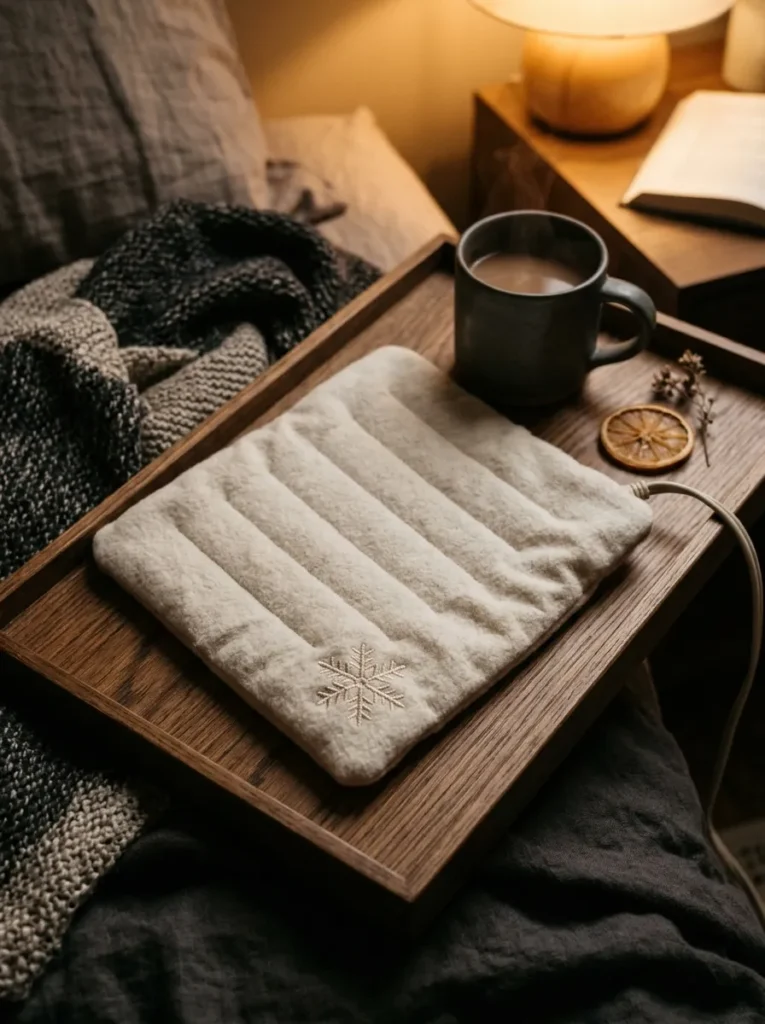
Vibe: The tray feels warm, a small comfort object waiting to be microwaved.
Why it works: A useful gift sells more easily than a decorative one, and flannel’s soft nap invites handling at a booth. Channel stitching keeps the filling evenly distributed.
How to get it: Sew a 6 by 20 inch flannel tube, divide it with three straight stitch channels, fill each with about a cup of uncooked rice, and close the end. Use 100% cotton thread and fabric so it is microwave-safe.
Shop The Look
- Flannel fabric solid cream
- Long grain rice bulk bag
- 100 percent cotton thread
- Snowflake embroidery pattern
- Washable fabric marker
5. Linen Christmas Tree Napkins
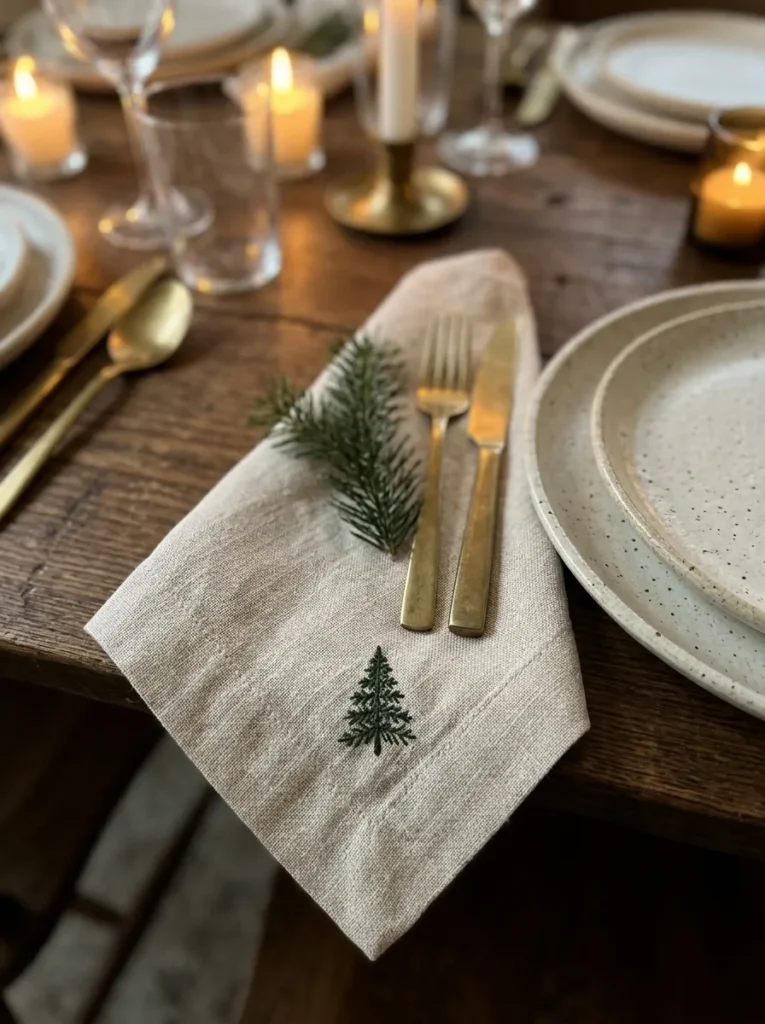
Vibe: The table feels refined, quiet and unfussy, with one small green detail.
Why it works: A single embroidered motif in the corner uses negative space, giving a plain napkin a premium finish. Linen’s visible weave carries texture without pattern.
How to get it: Cut 18-inch linen squares, press a ½-inch hem, miter each corner, and edge-stitch. Add a tree design with a simple satin stitch in two strands of green floss.
💡 Quick Win: Sell sets of four tied with twine for $24. Packaging adds perceived value.
Shop The Look
- Natural linen fabric medium weight
- Embroidery hoop 5 inch
- Green embroidery floss
- Kraft gift tags with twine
- Fabric glue stick temporary
6. Lavender Sachets in Holiday Prints
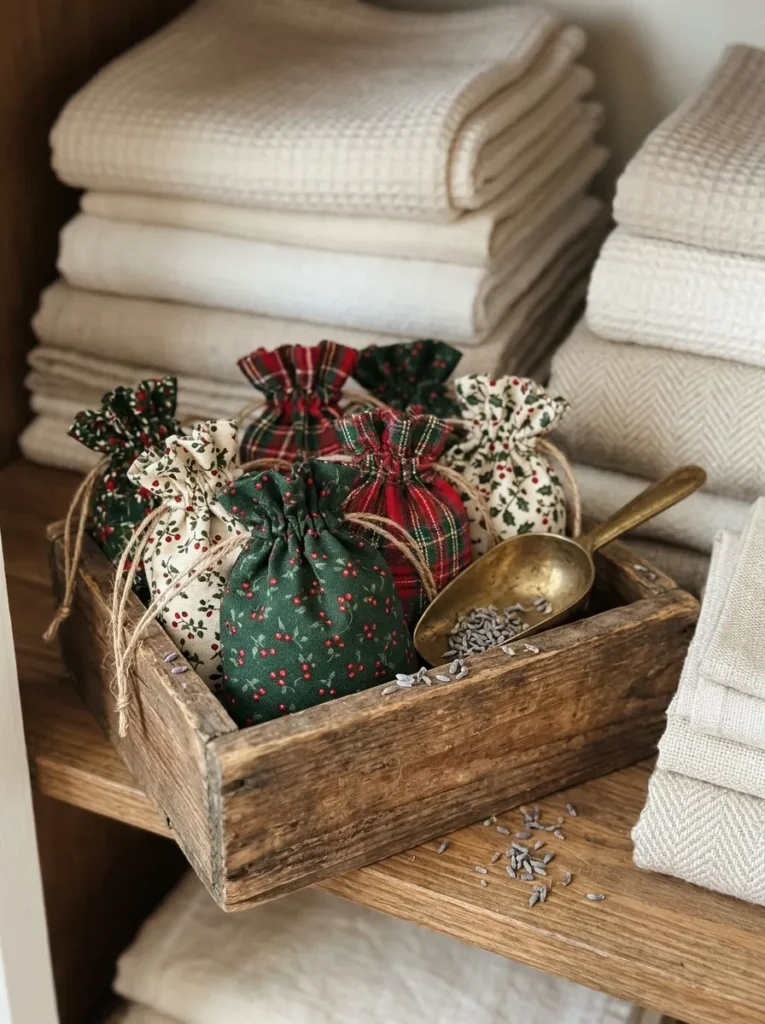
Vibe: The shelf feels fragrant, filled with tiny pouches that smell like summer in midwinter.
Why it works: A tiny item at a low price point is an easy add-on purchase, and scent engages a shopper beyond sight. Using one fabric family keeps a display coordinated.
How to get it: Cut 4 by 6 inch rectangles, sew three sides, fold a casing at the top, and thread a drawstring. Fill with a few tablespoons of dried lavender.
Shop The Look
- Dried lavender buds bulk
- Cotton drawstring cord thin
- Holiday print fat quarters mini
- Small funnel for filling
- Wooden crate display small
7. Quilted Potholders and Trivets
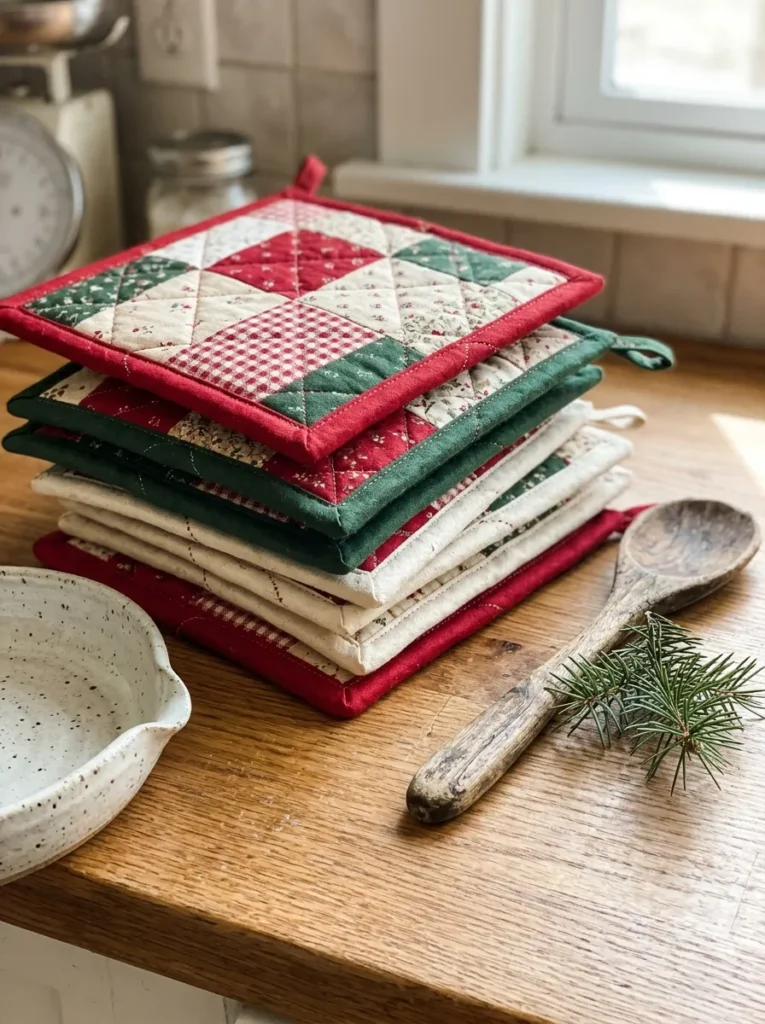
Vibe: The counter feels homey, stitched with the kind of care that looks inherited.
Why it works: Patchwork uses small scraps, and diagonal quilting adds texture while keeping the layers stable. A contrasting binding frames each piece like a picture.
How to get it: Layer two squares of cotton with Insul-Bright heat-resistant batting, quilt in diagonal lines about an inch apart, and bind with double-fold bias tape. Use heat-resistant batting for safe use.
💡 Quick Win: Sell a set of two for $18, since pairs move faster than singles.
Shop The Look
- Insul-Bright heat resistant batting
- Double fold bias tape red
- Cotton quilting fabric holiday bundle
- Walking foot sewing machine
- Quilting ruler 6 inch square
8. Fleece Scarves and Neck Warmers
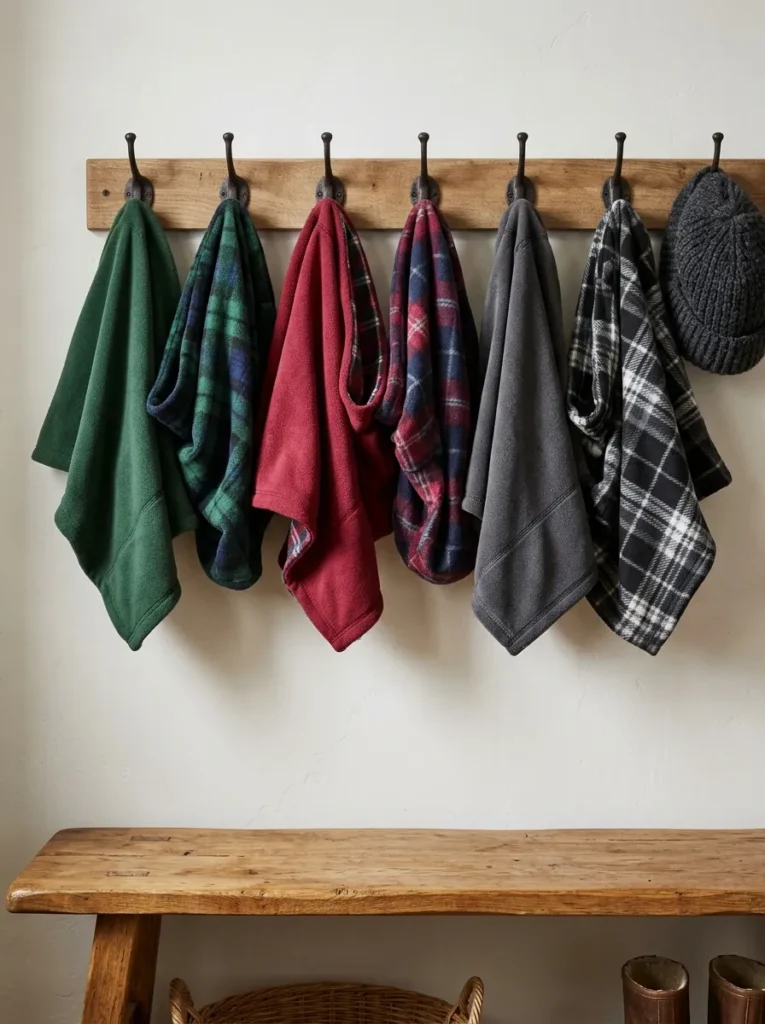
Vibe: The entry feels practical, with warmth you can grab on the way out the door.
Why it works: Fleece doesn’t fray, so it needs no hemming, which makes it among the fastest sewing projects to batch. Matching a plain outer to a plaid lining adds visual interest.
How to get it: Cut a 10 by 28 inch rectangle, fold it right sides together, sew the long edge, turn, and stitch the ends together with a hidden seam. A pair of 20-minute sessions yields about a dozen.
Shop The Look
- Anti-pill fleece fabric solid
- Plaid flannel lining fabric
- Jersey stretch needles
- Wonder clips for sewing
- Rotary cutter large
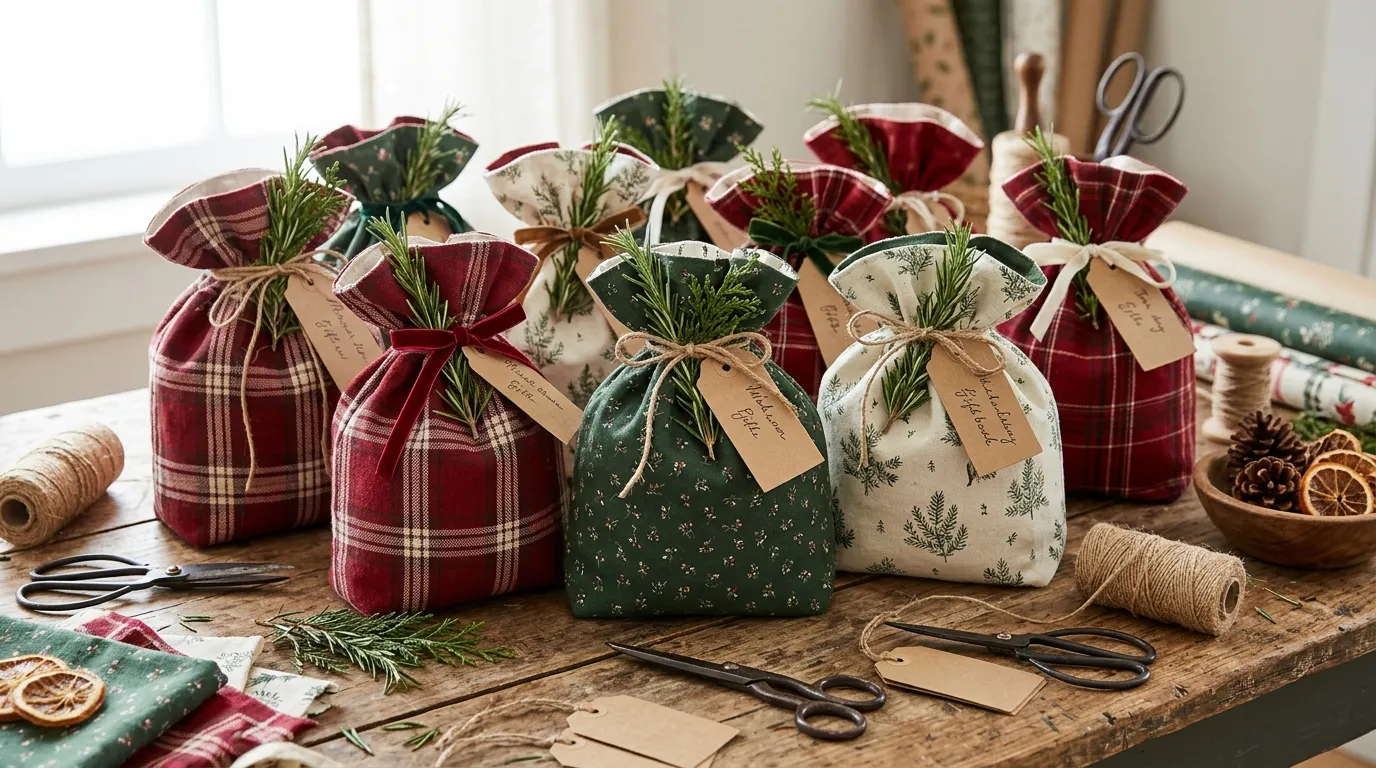
9. Reusable Fabric Gift Bags
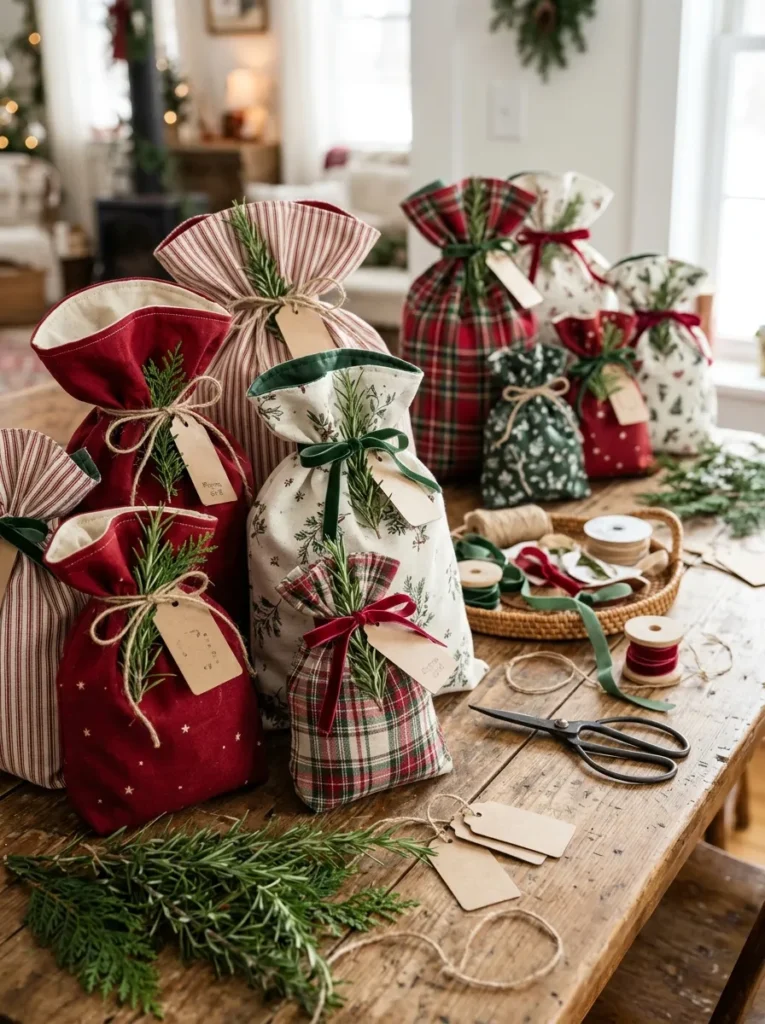
Vibe: The table feels festive, with wrapping that is itself part of the gift.
Why it works: Reusable wrapping fits the sustainability trend and replaces something shoppers buy anyway. Three sizes create a display with visual hierarchy.
How to get it: Cut three sizes, such as 6 by 8, 9 by 12, and 12 by 16 inches, sew side seams, fold a casing, and thread a drawstring ribbon. A set of three sells easily at $15.
💡 Quick Win: Make sets in three sizes and price them as a bundle to raise your average sale.
Shop The Look
- Cotton fabric holiday print bundle
- Satin ribbon drawstring red
- Safety pin bodkin for threading
- Kraft tags set with twine
- Rotary cutter set small
10. Stuffed Fabric Snowmen
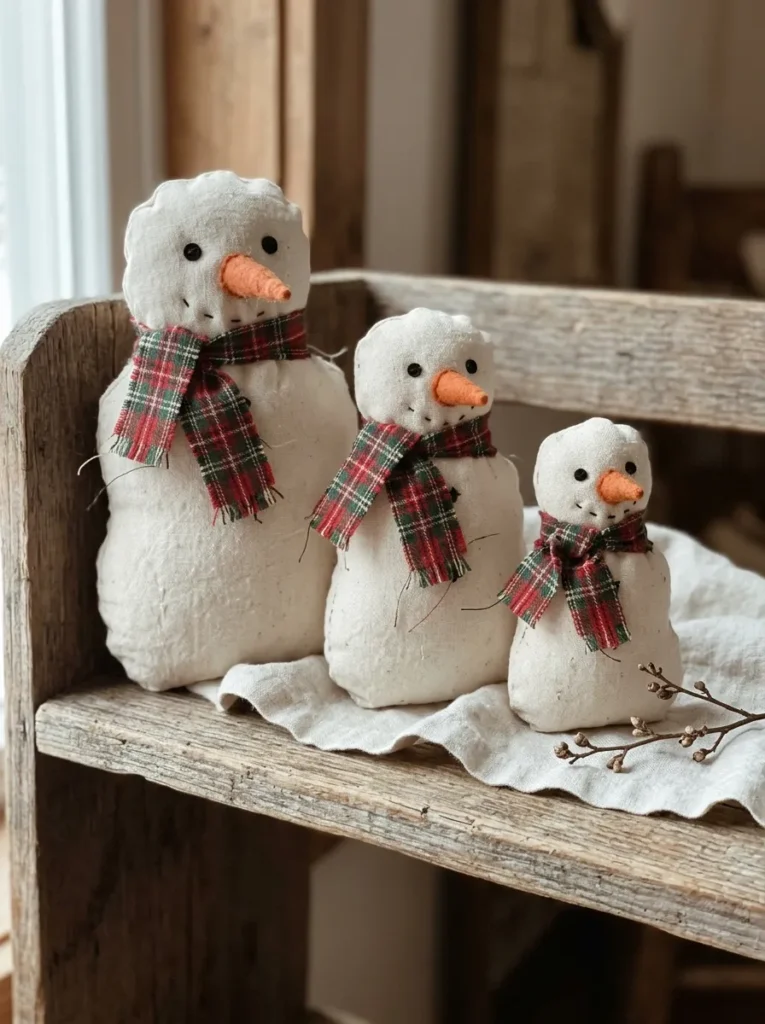
Vibe: The shelf feels whimsical, with small round figures that look like they might sneeze.
Why it works: Graduated sizes create a trio, a composition that reads as a family, and a bright accent scarf gives each figure a focal point against plain muslin. Imperfection is part of the charm.
How to get it: Cut two circles per body, sew them with a ¼-inch seam, stuff with fiberfill, and stack three sizes using hand stitches. Add a felt scarf and button eyes with embroidery floss.
Shop The Look
- Unbleached muslin fabric
- Plaid flannel scraps
- Black buttons small assorted
- Orange felt sheets
- Polyester fiberfill
11. Wool Felt Coasters with Holiday Motifs
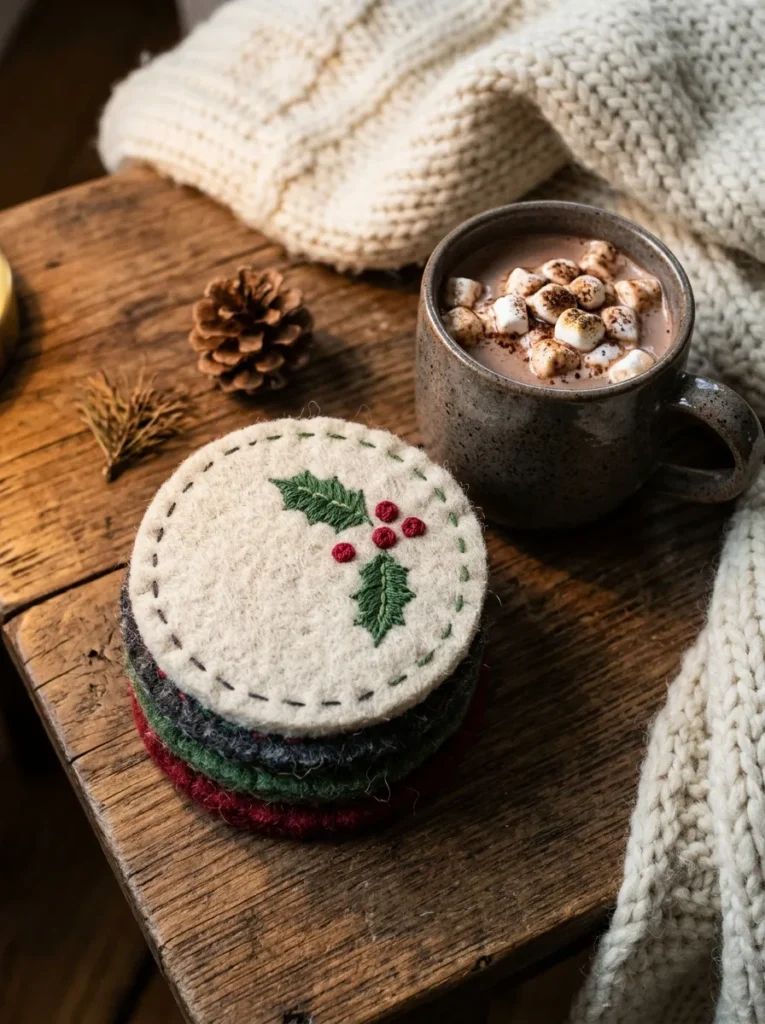
Vibe: The table feels snug, with small embroidered circles that protect the wood.
Why it works: Wool felt is dense and does not fray, so edges stay clean without finishing. A simple motif in contrasting thread adds detail without much time.
How to get it: Cut 4-inch circles from 3 mm wool-blend felt, mark a holly sprig with washable marker, and stitch it using a backstitch and French knots. Sell sets of four for $16.
💡 Quick Win: A circle cutter or a jar lid makes perfectly round shapes in seconds.
Shop The Look
- Wool felt 3mm sheets cream charcoal
- Embroidery floss green red
- Circle cutter craft
- Washable fabric marker
- Embroidery needles assorted
12. Cozy Fabric Bowl Cozies
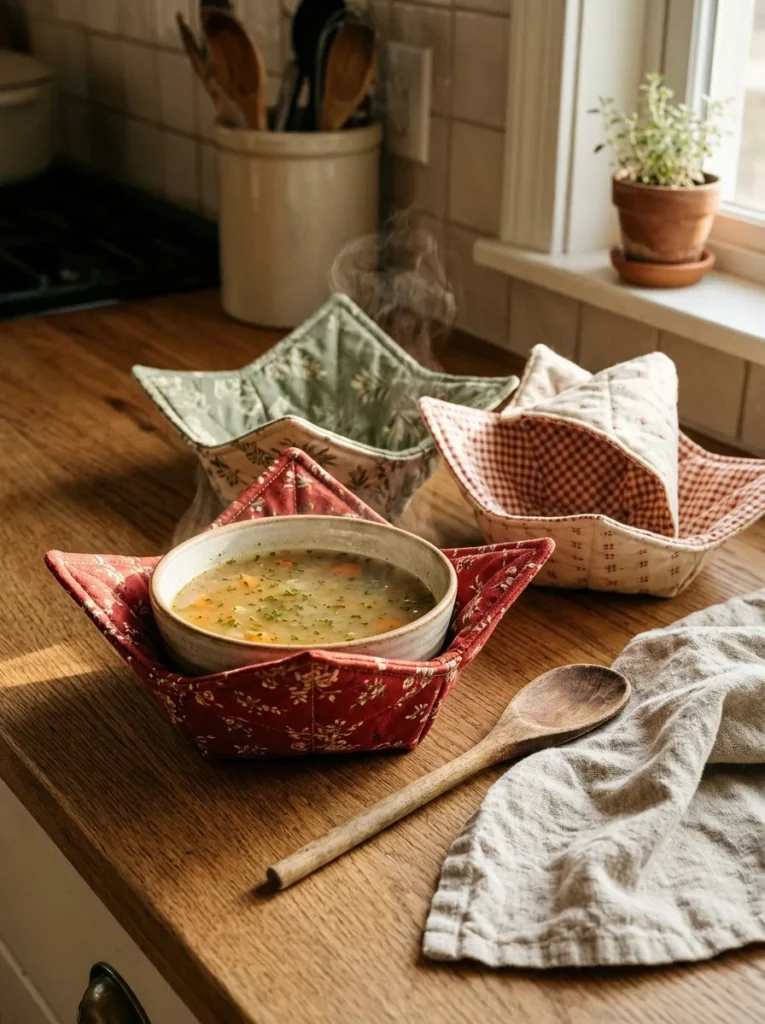
Vibe: The counter feels comforting, ready for a bowl of something hot.
Why it works: A functional gift that solves a problem sells better than purely decorative items, and reversible fabric gives shoppers two looks in one. Natural cotton fibers handle microwave heat safely.
How to get it: Use a printable 8-inch bowl cozy pattern, quilt two fabric layers with 100% cotton batting, and bind the edges. Use only 100% cotton fabric, batting, and thread for microwave safety.
Shop The Look
- 100 percent cotton batting
- Bowl cozy pattern printable
- Cotton quilting fabric Christmas
- Bias tape cotton double fold
- 100 percent cotton thread
13. Personalized Name Stockings
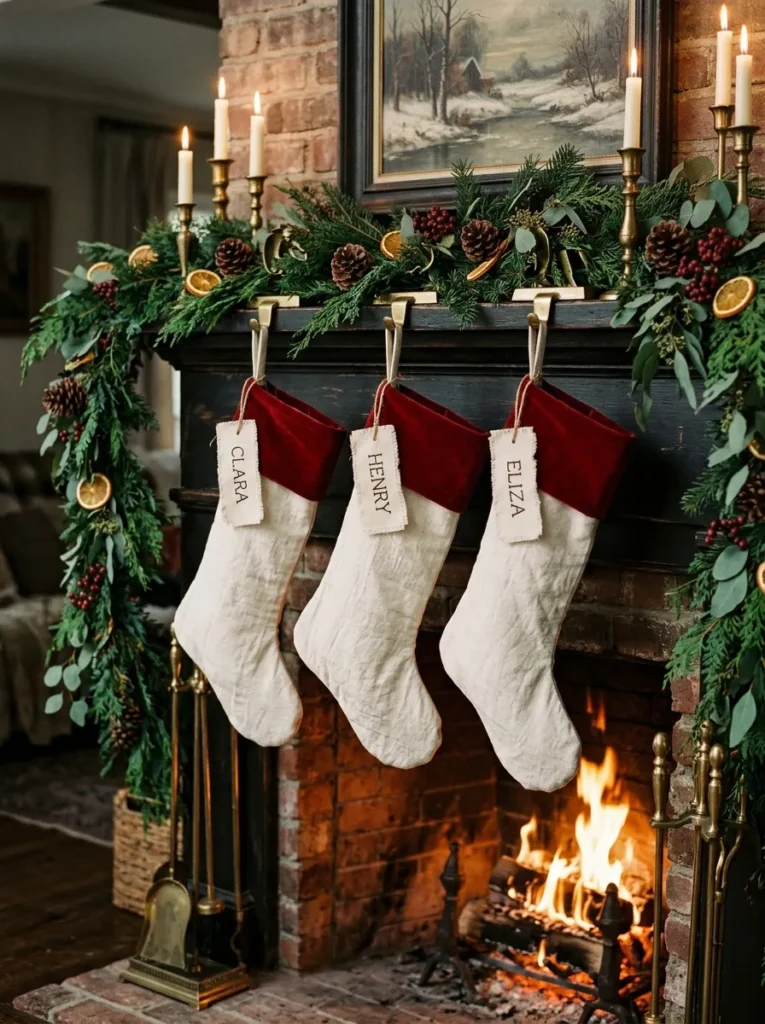
Vibe: The mantel feels heirloom, with names that make each stocking one of a kind.
Why it works: Personalization is the strongest price lever at a craft fair, because it makes an item impossible to compare against a store-bought version. Mixing linen and velvet gives rich texture contrast.
How to get it: Sew full-size stockings from a 16-inch pattern, then add a name tag cut from felt and stitched on with a backstitch. Take pre-orders at the booth and deliver in one week.
Shop The Look
- Linen fabric cream medium
- Velvet fabric red cotton
- Full size stocking pattern
- Felt name tags letters
- Embroidery floss red cream
How to Start Your Christmas Craft Fair Sewing
The single best first move is to buy one yard each of cranberry, forest green, and cream cotton or flannel. That three-color base becomes your stockings, napkins, bags, and sachets, so everything on your table looks like a coordinated collection instead of a random mix, and shoppers will buy more than one piece.
The most common mistake is pricing by materials alone. A $4 ornament priced at $5 loses money once you count your time. Instead, use this formula: materials plus your hourly rate for the minutes it takes, then multiply by two for the wholesale-to-retail margin. A 15-minute ornament with $1.50 in materials, priced around $8, fixes the shortfall.
Three items under $50 get you started: a rotary cutter and mat ($25), a set of 20 embroidery needles and floss ($10), and a roll of 100% cotton batting ($12). They cover cutting, hand finishing, and stuffing for most of these projects.
A weekend gets you a batch of 30 to 40 small items for $40 to $80. A full booth of 100 to 150 pieces across all 13 projects takes four to six weeks of evenings and runs $200 to $400 in materials. Booth fees typically run $25 to $100 for local fairs, so plan to earn back at least three times your total costs.
Frequently Asked Questions About Easy Christmas Sewing Crafts to Sell
What is the best Christmas sewing craft to sell at craft fairs?
Small, useful, and low-cost items sell fastest, including felt ornaments, rice-filled heating pads, and bowl cozies. Items between $5 and $20 move quickly, while personalized pieces like name stockings can command $25 to $40. A mix of prices on one table lets every shopper find something.
What colors sell best for Christmas sewing crafts?
Cranberry, forest green, cream, and buffalo check red-and-black are the most reliable. Natural linen and gold accents suit shoppers who prefer a neutral, modern Christmas. Keep your table to three main colors plus one neutral so it looks curated from across the aisle.
How much does it cost to make Christmas sewing crafts to sell?
Most small items cost $1 to $5 in materials, and a full booth of 100 to 150 pieces generally runs $200 to $400. Buying fabric in bulk, using scraps, and shopping holiday sales cut that figure. Add booth fees of $25 to $100, packaging, and a sign.
Do I need a license or insurance to sell crafts at a fair?
Requirements vary by location. Many fairs require a booth application and proof of a sales tax permit, and some request liability insurance. Check with the organizer and your local tax office, and note that items for children, such as toys, may need safety labeling under local rules. This is general information, not legal advice.
How many items should I make for a craft fair?
For a one-day fair, aim for 100 to 150 items, weighted toward low-priced pieces. Many sellers make about half in $5 to $10 items, a third in $12 to $20 items, and the rest as higher-priced showpieces. Track what sells so you can adjust next year.
Ready to Start Your Easy Christmas Sewing Crafts to Sell?
These 13 easy Christmas sewing crafts cover the full range, from the color of a buffalo check stocking and the texture of wool felt to the glow of a finished table and the layout of a well-priced booth. Starting small isn’t a compromise, because one finished batch of ornaments will tell you more about your market than a cart full of fabric. Today, cut out and sew a single felt ornament so you know your time and cost per piece. When your table is set, you’ll feel the quiet pride of watching someone choose something you made. Pin the projects that made you reach for your thread, because the ones that stay with you are the ones worth stealing.